Showing posts with label DRC. Show all posts

Friday, 7 August 2015

Virunga National Park: Goma to Rumangabo

Here are some photos taken on a road trip yesterday between the city of Goma and the Rumangabo station where the Virunga National Park has its headquarters.

The approximately 50 kilometer drive along the 'Route Nationale 4' took around two hours. As elsewhere in the DRC, the road is slow, bumpy and dusty. Lorries, Jeeps, SUVs, cars, motorbikes, bicycles, tshukudus, cattle herders and pedestrians all converge along this main artery linking Goma and Kampala in Uganda. The road also goes through the beautiful but threatened Virunga National Park - formerly the Albert National Park created in 1925 - Africa's first park.

Although the security situation in Goma has improved over the past year since the defeat of the M23 rebel group, insecurity is still a problem in the region. The population is under threat from militia. One villager told me 'pour la sécurité, on se couche tôt'. Businessmen increasingly complain of hostage taking in exchange of ransom money.

In addition to security problems, natural risks persist. Last night a minor earthquake woke up the people of Goma, but the magnitude of the quake was worse in Bukavu (5.6 on the Richter scale) where it caused the death two children and a police officer. Sixty people were injured. People I spoke with in Goma said they left the house to pray with their neighbors. Everyone was talking about the tremors this morning. By the afternoon the subject was no longer part of the conservation.

The Rutshuru area is a complex land use mosaic occupied by the Virunga National Park, rural villages and the Katale coffee plantation.


This sand pit is exploited for the rapidly expanding construction sector in Goma which now has a population of over one million inhabitants, many of whom fled the insecurity of North Kivu and have decided to stay.


Entry point in the Virunga National Park to start the approximately five-hour climb up the Nyiragongo which last erupted in January 2002. The volcano sits under the clouds.


The Kibumba market is an important rallying point for the farmers and traders who feed the people of Goma.


Kibumba


High rural population density means that land use is carefully planned.


Cattle herding is a longstanding tradition in the region.


These are potato plants. Potatoes are an important staple in the Kivu diet.
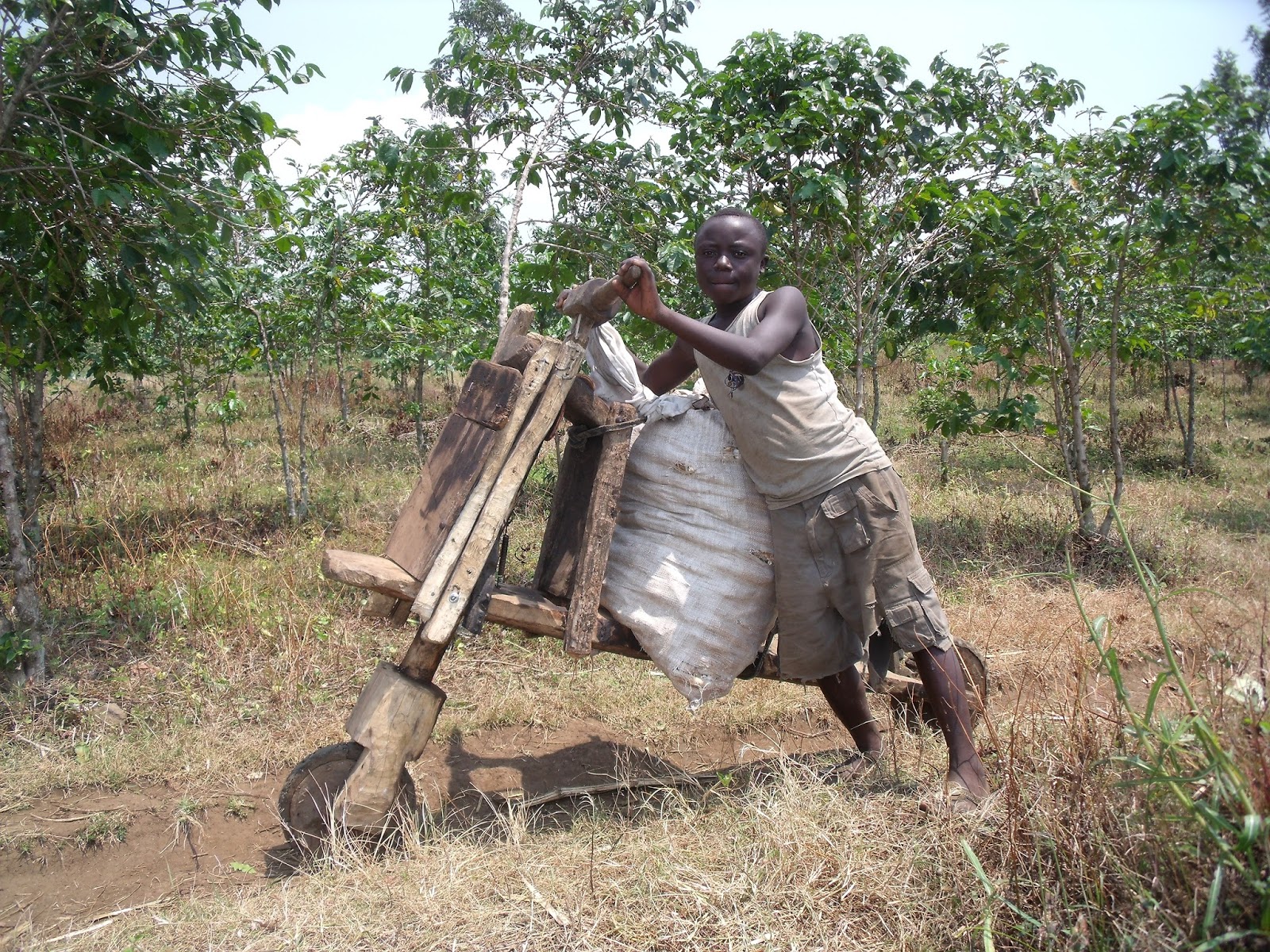


Young tshukudeur with a sack of potatoes.


It’s a long, dusty and bumpy road.


Insecurity persists in the region despite the presence of UN peacekeepers and the Congolese army.


Dream on.


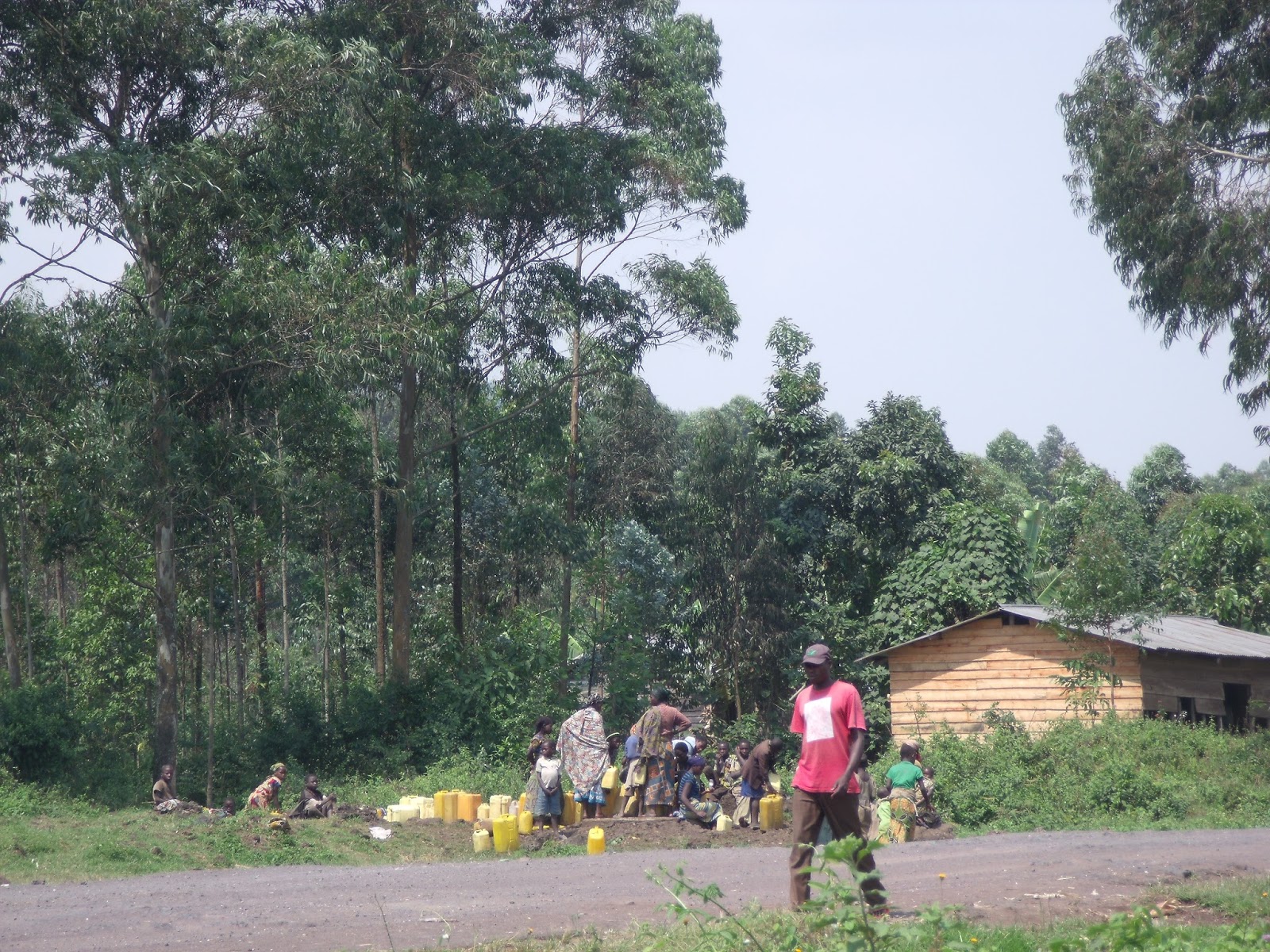
Access to water is a daily struggle.


Drying laundry and manioc


Ranger Francine. Women are assuming important roles in the ICCN ranger force.


Virunga park headquarters at Rumangabo


Baboon in the vicinity of Rumangabo


Head warden office building at Rumangabo


Virunga patrol blood hounds


RIP


Pay day at the Katale coffee plantation


Raw coffee


Lucas and I at the Katale coffee plantation


Friday, 7 February 2014

Financing Congo's Agricultural Development


Ed Rackely’s post on Congo’s recently launched National Investment Plan for Agriculture offers a realistic analysis of some of the country’s challenges in modernizing the agriculture sector. He mentions correctly that there is not enough funding to reach targets. I would add that the little money that is available is largely spent on salaries in Kinshasa with minimal trickle down into the field.

But it is not only a money problem. 

On the institutional landscape, there is an overall lack of professionalism and capacity in terms of human resources and material. Government offices responsible for agricultural priorities are under-funded, under-staffed and in need of competent experts with up-to-date professional skills and vision. They also lack data management systems and basic equipment such as phones, copiers and computers.

An additional hurdle is the number of Ministries involved in managing the sector. The Ministry of Agriculture, the Ministry of Rural Development, the Ministry of Environment Conservation, Water and Forests, the Ministry of Scientific and Technological Research and the Ministry of Women and the Family all share rural development and agricultural objectives. In theory, the Ministry of Planning coordinates the financing of these five ministries but is, in reality, overwhelmed with other urgencies.

The problem here is that when priorities are supposed to be dealt with by multiple partners, no one really does anything. There is an absence of coordination, tasks get passed on to someone else, disagreements over costs surface and there tends to be a generalized absence of accountability or ownership.


Friday, 31 January 2014

Reactivating the Masquerade blog

After a long period of inactivity, I am going to give a new life to this blog. The first reason is to announce the publication in French of Congo Masquerade, now available as Congo, la mascarade de l’aide au development at http://www.editions-academia.be/index2.php?PHPSESSID=c8a42154b4910bc055af5734916065b7.

I also want to let you know of a new book I am writing. The working title is Congo’s Environmental Paradox: Potential and Predation in a Land of Plenty. 

Future posts will be less about politics and more about the political economy of natural resource management.

Below is a summary.

Congo’s Environmental Paradox is about the political economy of natural resources - forests, minerals, land, water and oil. A land of plenty with the resources the world needs, DRC is a resource paradise for some, but an environmental nightmare for others. 

No other country in Africa, and few countries worldwide, has such an impressive concentration and diversity of natural wealth. Congo has over 1,100 mineral substances and is home to the world’s second largest tropical rainforest. Endowed with abundant arable land, rain and sunshine, Congo’s farmers could feed a billion people while also providing new sources of sustainable biofuels. More than half of Africa’s fish and water are located in this troubled nation, whose hydroelectric capacity could light up the entire continent. Congo has oil too, so as some major importers like the United States shift their dependency away from the Middle East, its geo-strategic significance as a petroleum producer could increase.

The book is original because it is will present Congo’s five strategic environment sectors in a holistic way and through an historic lens that tracks the major changes since Joseph Kabila has asserted himself as president. It will revise conventional political economy understanding of how power is structured in the DRC, analyzing how recent trends in globalization and elite politics have stimulated new power relations.

Congo's Environmental Paradox adopts a political economy approach to analyze the complicated interactions between power and natural resources and between the sectors themselves. There is little published information about the governance of Congo’s agricultural sector, water resources and oil. Whatever information does exist tends to be sector specific and lacks historic depth. But it is impossible to implement a viable forestry policy without making linkages to the energy and agriculture sectors. Artisanal mining has consequences on food production and industrial mining is thirsty for power – meaning it needs electricity. Oil production undermines protected area management. These are some of the interconnections to be examined through a holistic conceptual framework.